Five days, three cities, one founder journey: the first EIT AI Entrepreneurs Lab
From an EU strategy to a founder-first programme: how the first edition of the AI Entrepreneurs Lab took AI and robotics founders from Paris to Brussels to Amsterdam, and what they took home.
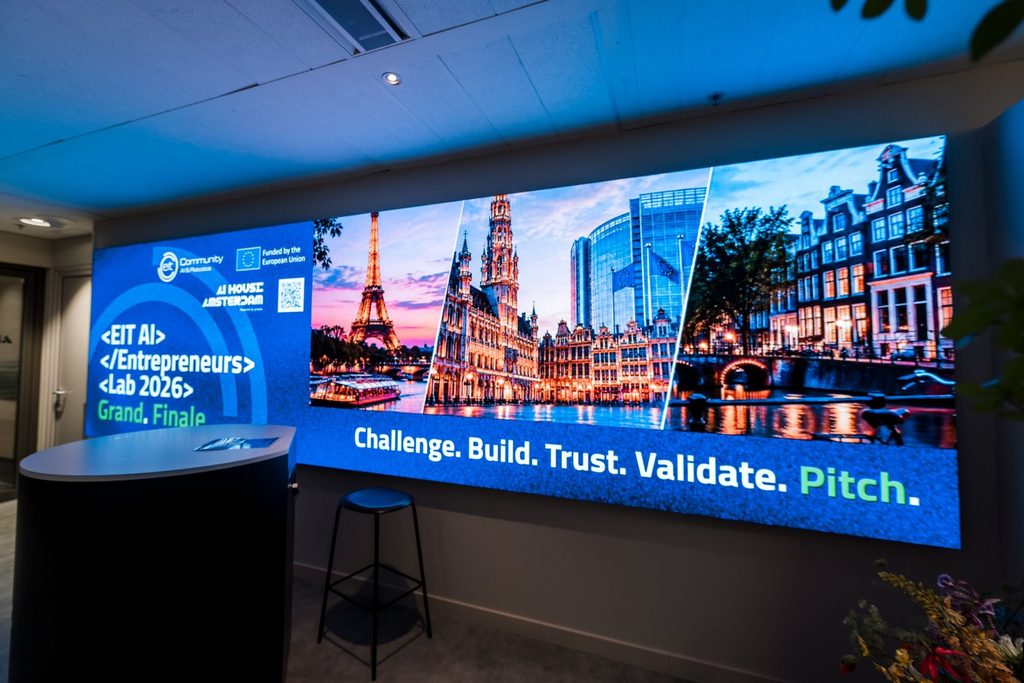
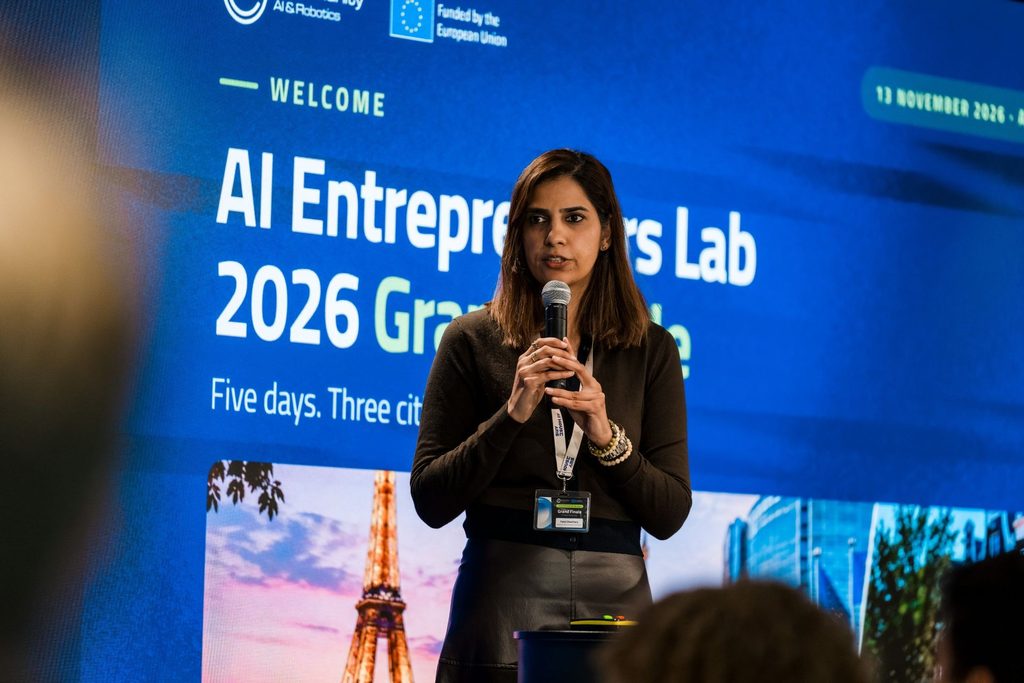
On Monday 9 November, a cohort of AI and robotics founders met for the first time at Le Village by CA in Paris. Five days, three cities and more than forty speakers, mentors and jury members later, they took the stage at AI House Amsterdam to pitch for €10,000. In between, they challenged their assumptions, met the European Commission's AI Office, went into the field to talk to customers and, in many cases, rebuilt their ventures from the ground up.
Why the Lab exists: from strategy to founders
Europe has world-class AI research. What it often lacks is the environment that turns research into companies. Talent and capital are spread across 27 countries, funding is rich but hard to navigate, and too many ventures grow one market at a time.
The European Commission's Apply AI Strategy, adopted on 8 October 2025, sets out to move Europe from building AI to using it. It also recognises that this takes people, not only technology. The Commission commits to establishing an "AI entrepreneurs lab" that, building on existing initiatives such as those of the EIT and European university alliances, brings together brilliant AI graduates with entrepreneurial mentors.
The AI Entrepreneurs Lab is that commitment in practice. It builds on the EIT AI Founders Club, the founder-first living lab piloted by the EIT Community in 2025, and turns it into a European programme that helps AI talent become founders ready to compete globally. The vision: an original European early-stage programme, built from Europe's real problems, not copied from Silicon Valley.
Not another AI programme
The Lab is designed as a founder stress-test. There are no lectures: every session is built to produce evidence, not certificates. Seven principles shape the week:
- Challenge first: question every assumption before building. What if you are wrong?
- Learn from founders: peer learning with founders who share what really happened.
- Learn from different markets: three cities, three ecosystems, with Europe's diversity treated as a market rather than a barrier.
- Usefulness over technology: turn AI projects into ventures that solve real problems.
- Trust as value: use EU regulation and trustworthy AI as a competitive advantage.
- Proof over pitch: no customer, no company.
- Global from day one: build for the world, not one country at a time.
The open call ran from 1 September to 21 October 2026 and drew more than 300 applications from Master's and PhD students, graduates and early-stage founders.
The journey: Paris → Brussels → Amsterdam
Day 1, Paris: Challenge everything you know. At Le Village by CA, the week opened with the founder global mindset, a session on the global entrepreneurial journey with UC Berkeley, and the Counterfactual Lab, where every founder had to answer one question: what if you are wrong? AI Factory France, Hub France IA, DATAIA and GENCI showed how French research reaches the market. By the end of the day, founders were rebuilding their ventures.
Day 2, Paris: From innovation to opportunity. Systematic Paris-Region, the European Centre for AI Excellence and Bpifrance mapped France as a deep-tech hub and Europe's route to AI champions. Two hands-on venture-building clinics followed, along with candid conversations with founders and scale-up leaders from DriveTrust and Hayden AI.
Day 3, Brussels: From policy to opportunities. The cohort spent the morning at the European AI Office, welcomed by its Director, Dr Lucilla Sioli, who met the founders in person. Sessions covered Europe's AI innovation ecosystem, the EU AI Act and funding, followed by an open exchange between founders and Commission speakers. In the afternoon at the European Tech Embassy, the focus moved to trust: trust in yourself as a founder, and trust in your team.
Day 4, Amsterdam: No customer, no company. At the VU Amsterdam Demonstrator Lab, founders went into the field for a full afternoon of customer discovery, supported by 17 expert mentors from venture capital, industry, consulting and the EIT network. They closed the day in the Proof Room, testing what they had learned and collecting endorsements.
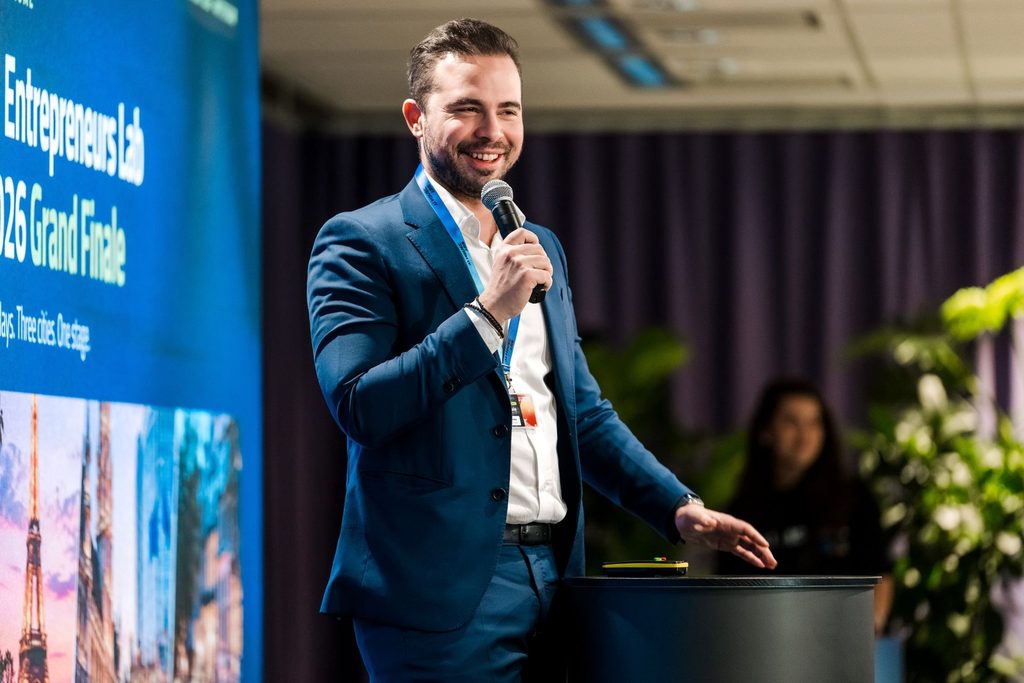
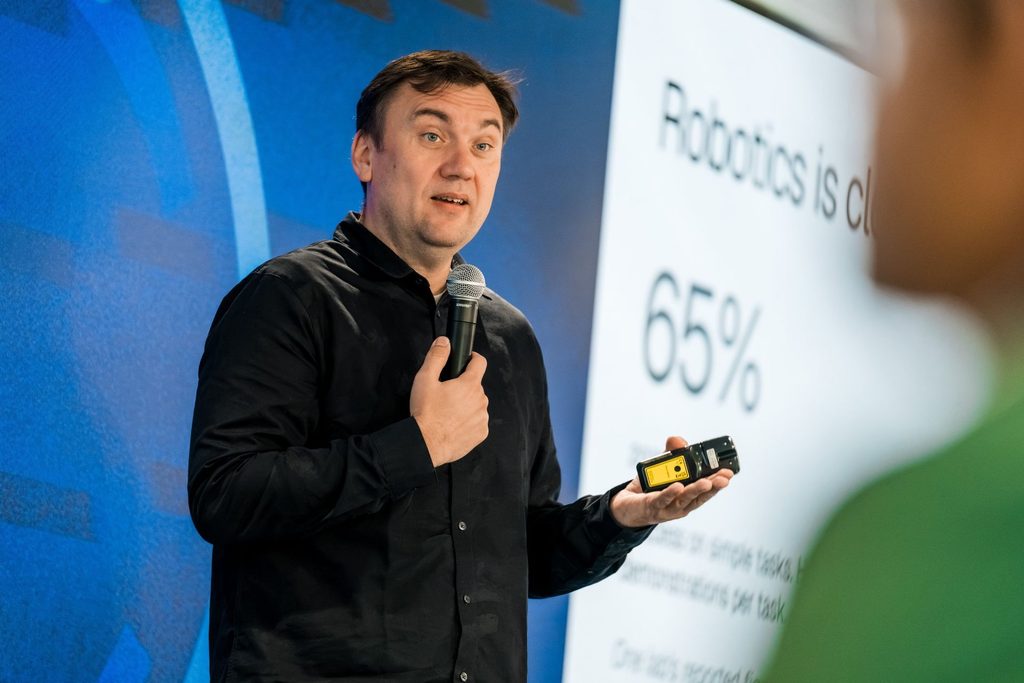
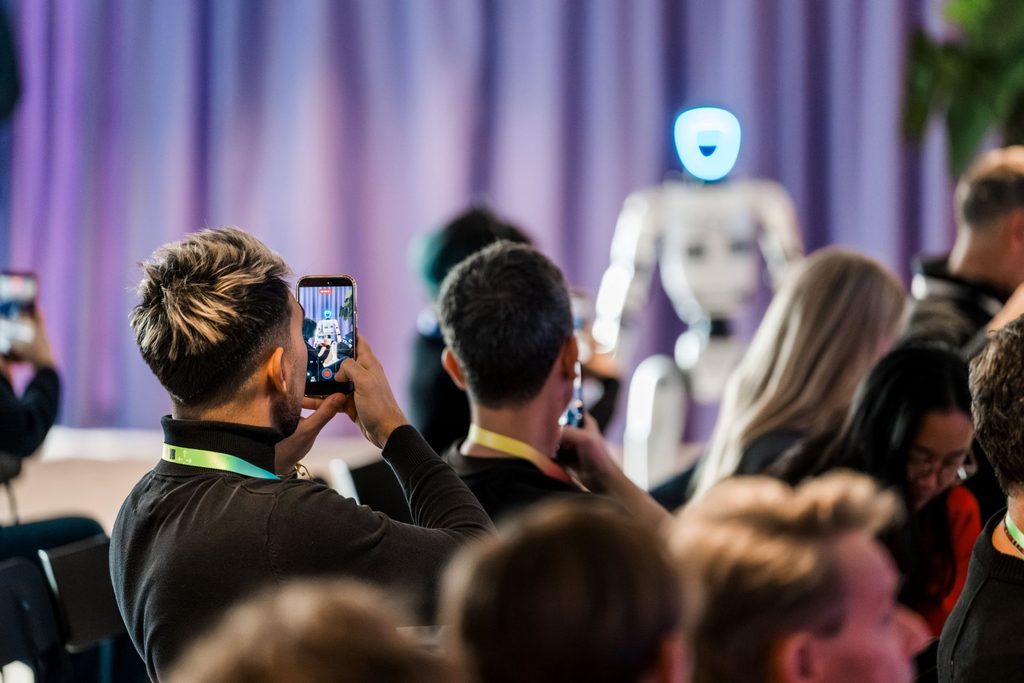
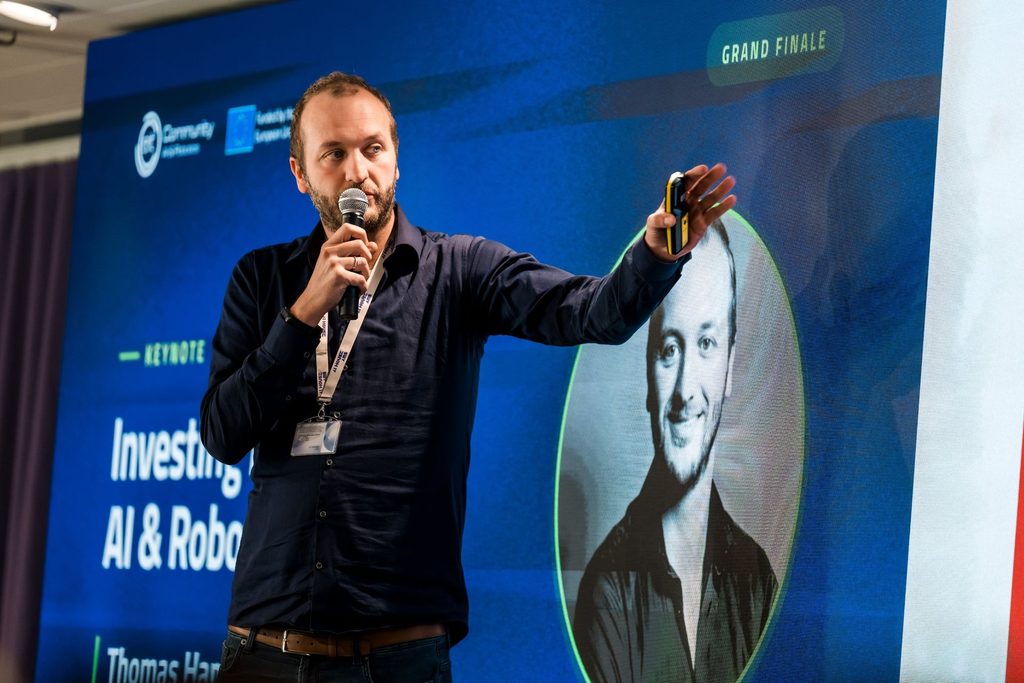
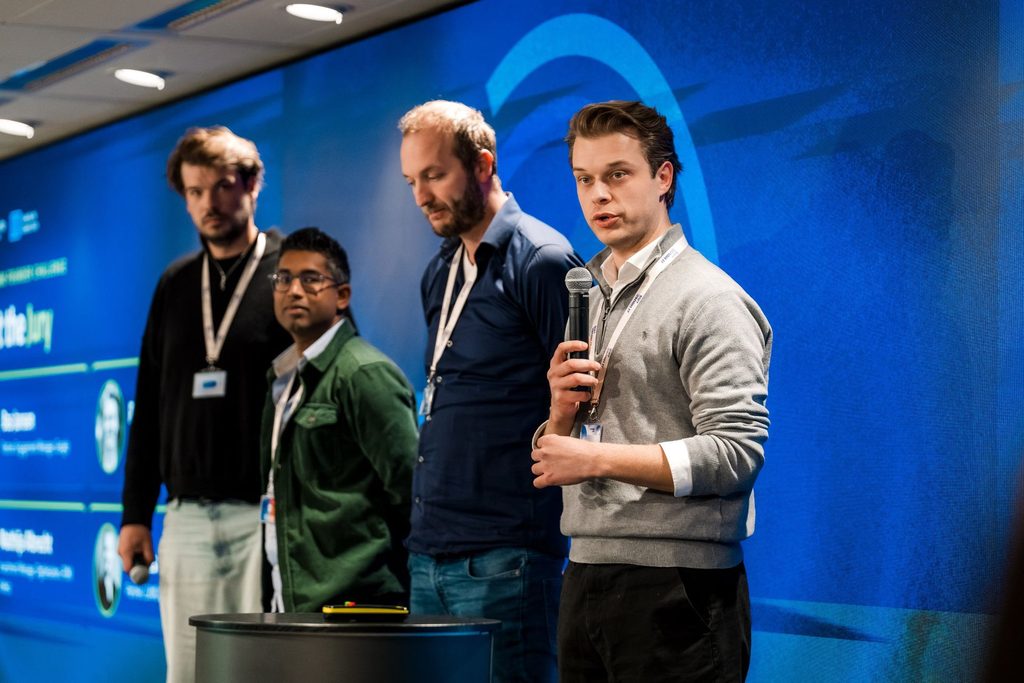
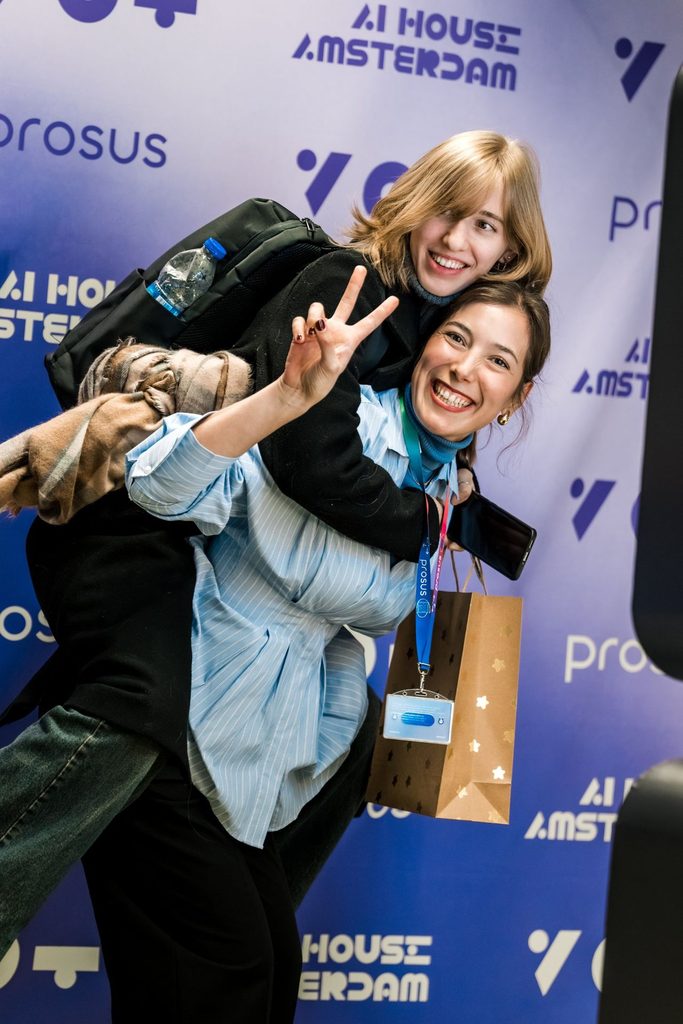
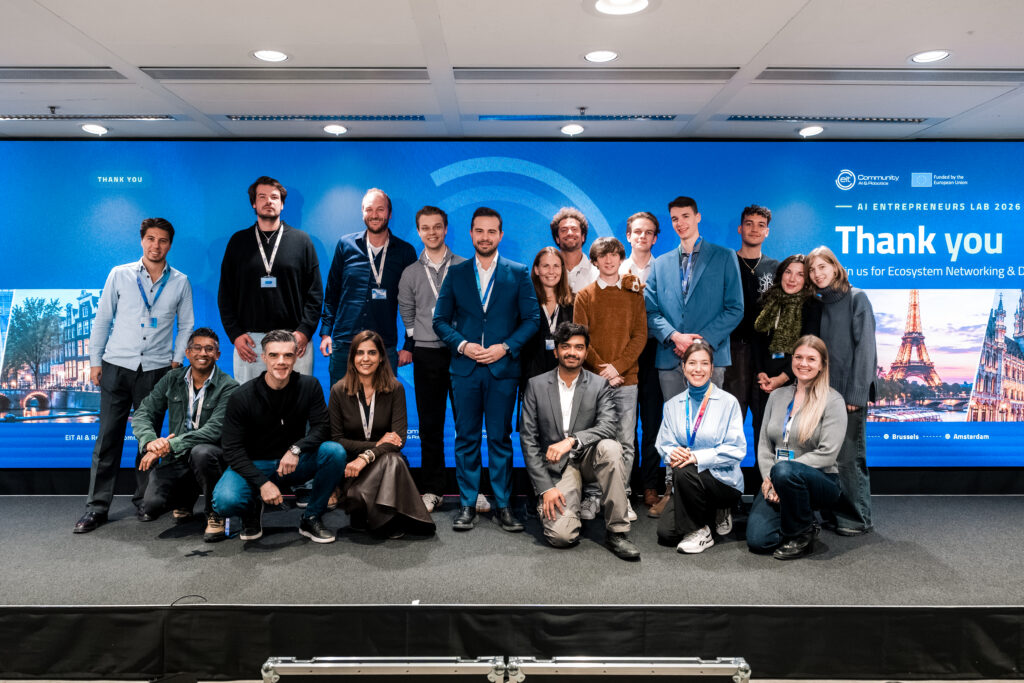
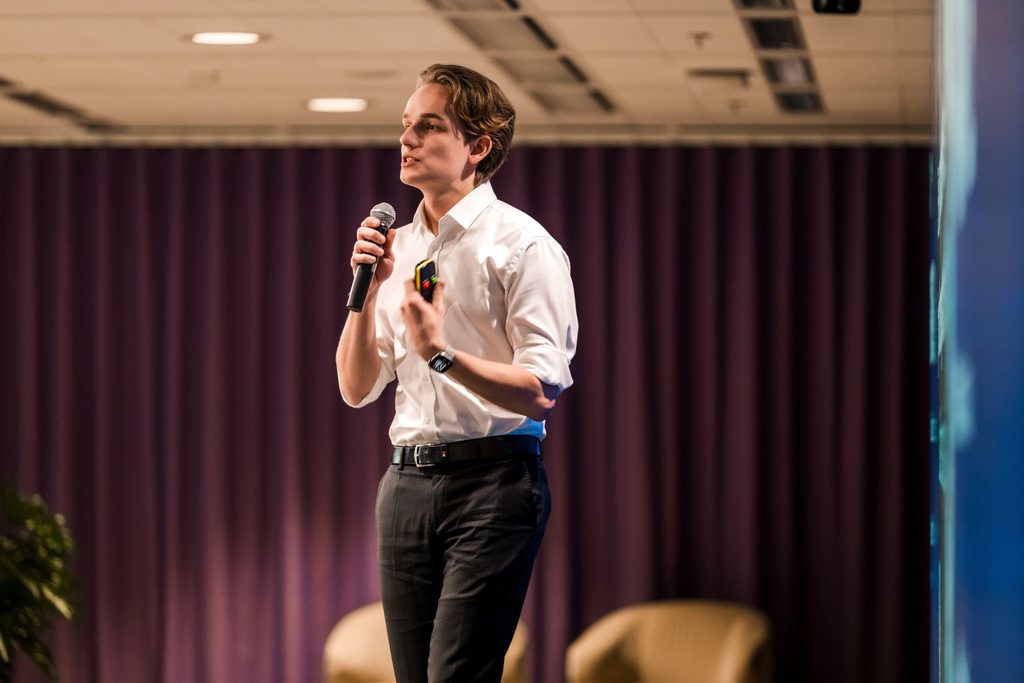
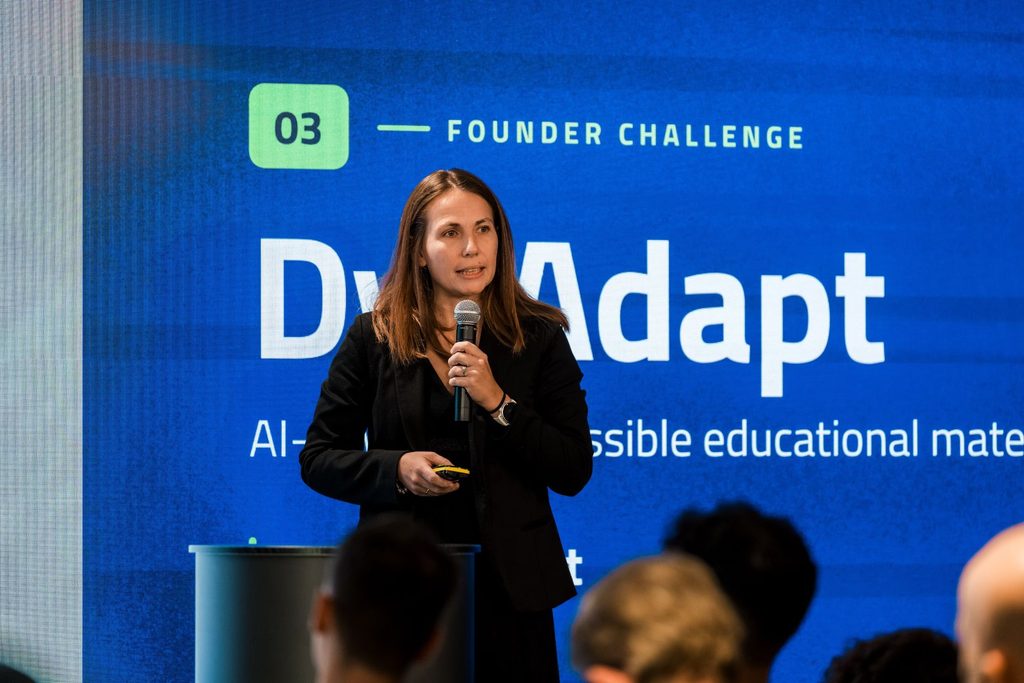
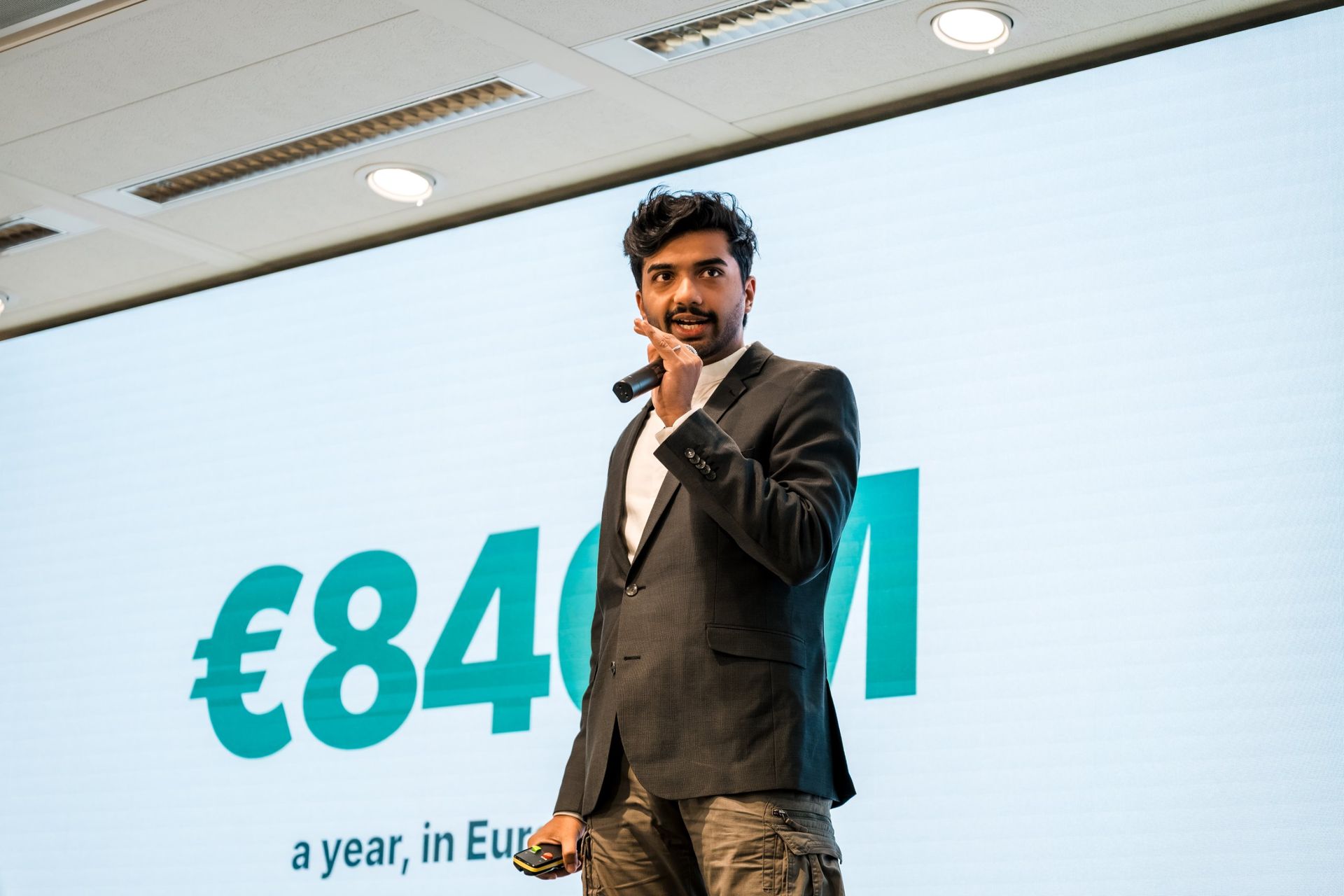
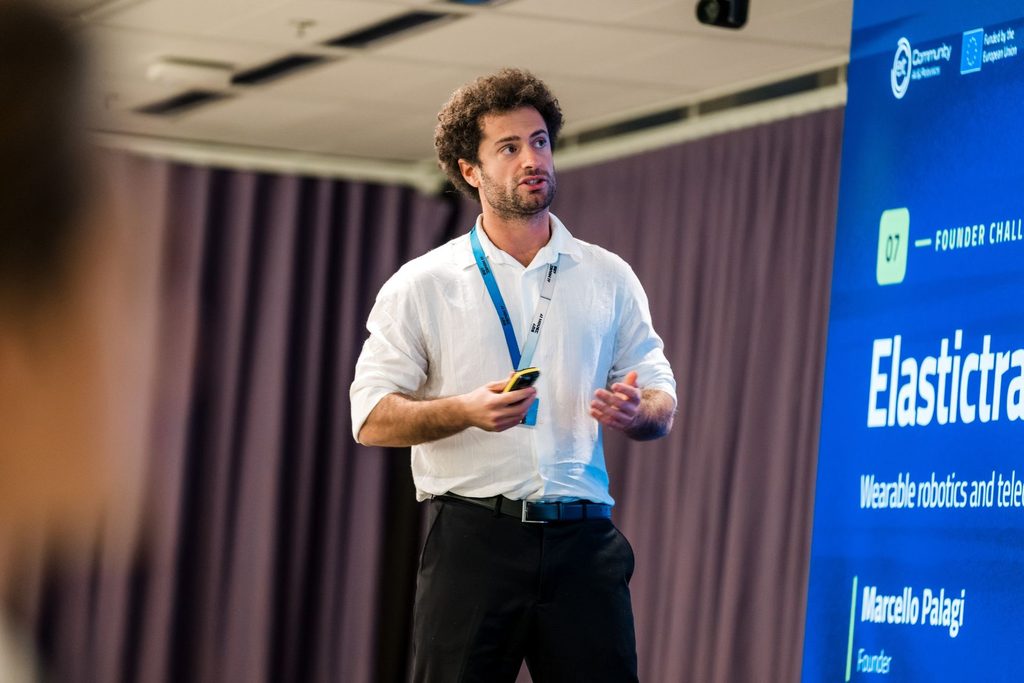
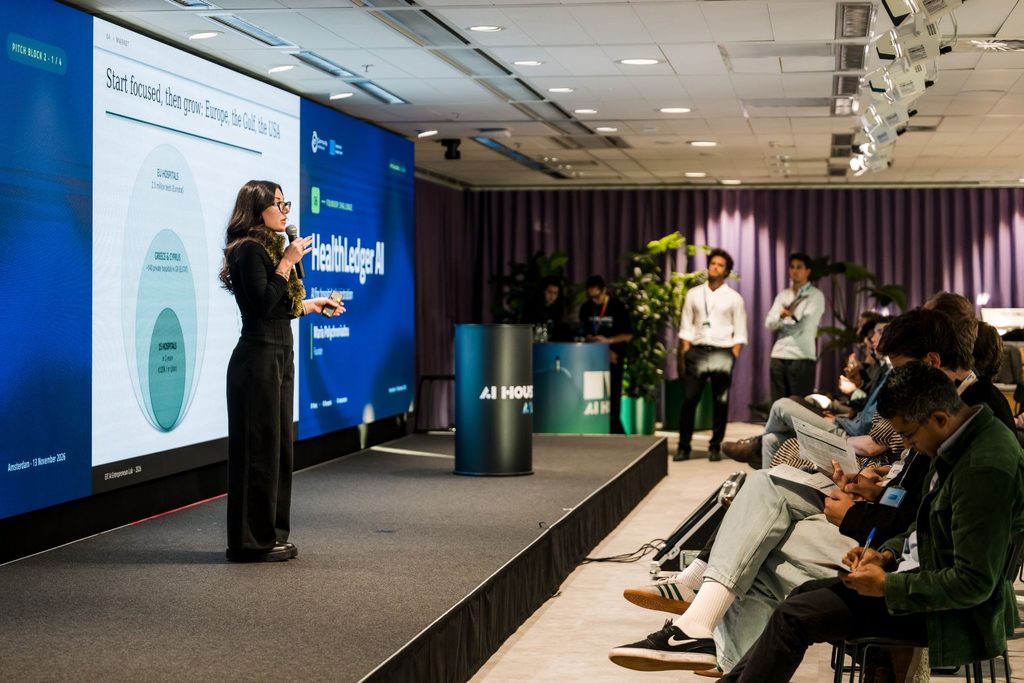
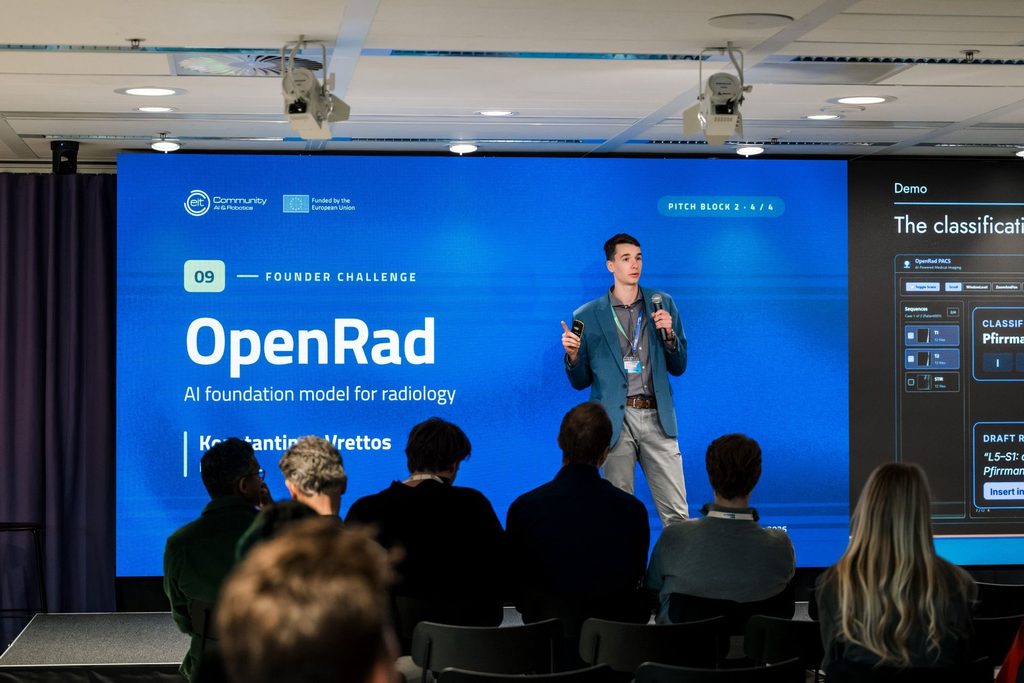
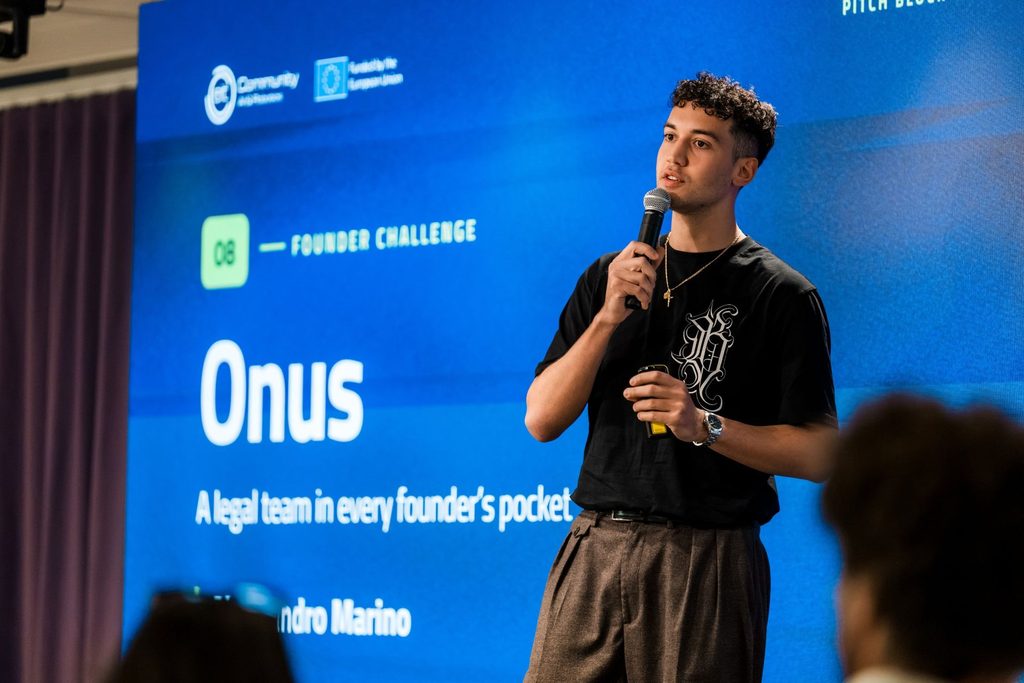
Day 5, Amsterdam: The Grand Finale. At AI House Amsterdam, co-hosted with Prosus, the week ended in front of the ecosystem. After keynotes from Prosus and LUMO Labs, the jury opened with a reverse pitch before the founders pitched for the €10,000 Founder Challenge. Four ventures each won €10,000: DysAdapt, Stipera, OpenRad and Elastictrack Robotics.
The cohort
The cohort brought AI and robotics ventures from health and medtech, rehabilitation, construction, education, veterinary care and legal tech:
- DysAdapt (Marine Guyot): AI-powered accessible educational materials · €10,000 winner
- Elastictrack Robotics (Marcello Palagi): wearable robotics and teleoperation · €10,000 winner
- HealthLedger AI (Maria Polychroniadou): AI for hospital administration
- Onus (Alessandro Marino): a legal team in every founder's pocket
- OpenRad (Konstantinos Vrettos): AI foundation model for radiology · €10,000 winner
- RIPPLE (Mateusz Gora): rehabilitation robotics
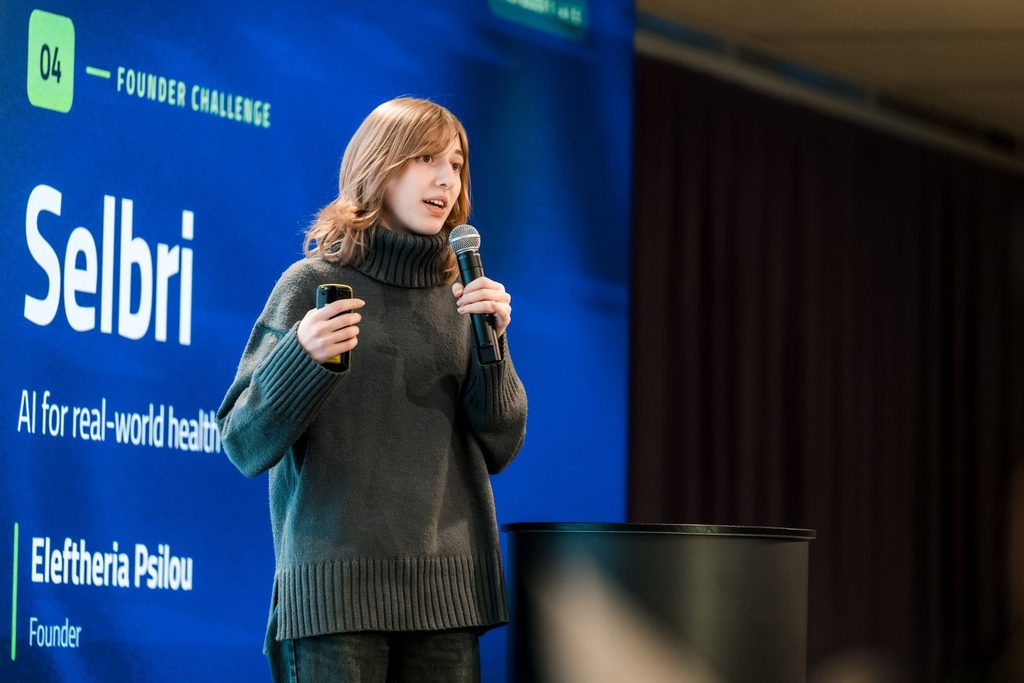
- Selbri (Eleftheria Psilou): AI for real-world health evidence
- Stipera (Tej Sukhatme): AI buying desk for construction · €10,000 winner
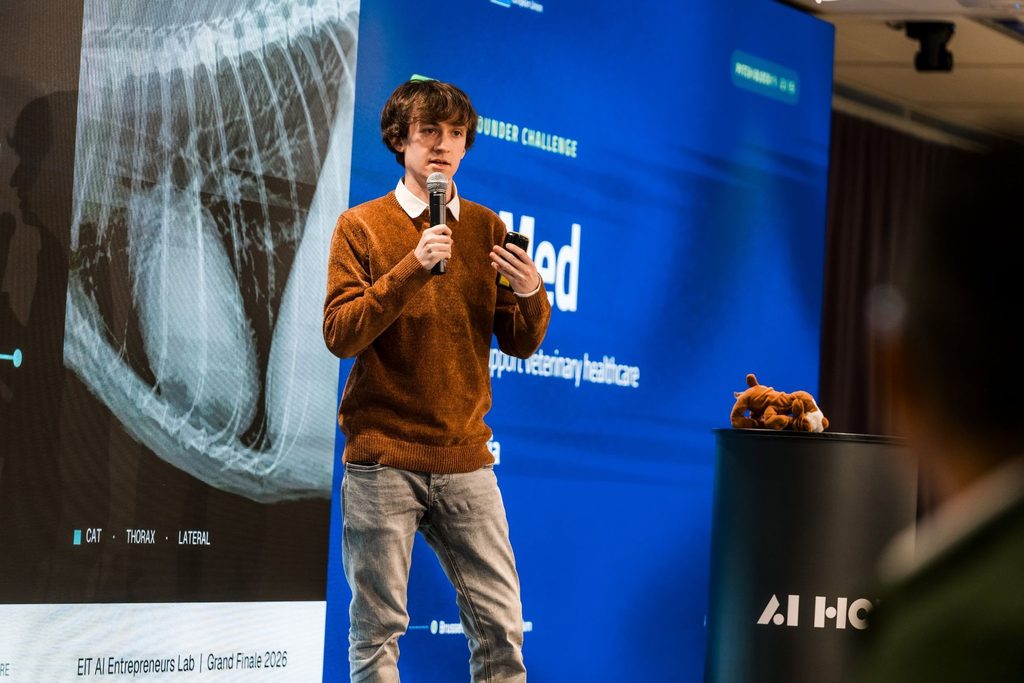
- VibeMed (Roberto Di Via): AI system to support veterinary healthcare
The impact: what founders take home
The clearest impact of the Lab is in how the founders now think about their ventures. Ideas that arrived small left designed for Europe and further. Founders pivoted where the evidence pointed, guided by mentors who challenged every assumption, and replaced guesswork with proof. The pace of the week pushed founders who felt they weren't ready to step up and pitch anyway, and four of them left with €10,000 to fund their next step.
They also leave with something few founders get this early: a European network. Across Paris, Brussels and Amsterdam, the Lab brought together parts of Europe's AI and robotics ecosystem that founders rarely meet in one place, with 24 partner organisations, 22 speakers and ecosystem contributors and 17 expert mentors, from AI Factories and the European AI Office to investors, corporates and four EIT communities working together. The founders didn't just complete a programme. They leave with sharper ventures, a global mindset and an ecosystem that already knows their names.
In the founders' words
"On Tuesday in Paris, it took one of our mentors ten minutes to understand what Stipera does. By Friday in Amsterdam, we could say it in one sentence: Stipera checks every subcontractor quote against the tender, so builders stop signing for work that isn't in the price. That's what the Lab did for us. Paris, Brussels and Amsterdam taught us to ask better questions and to see the problem from the contractor's side, not ours." - Tej Sukhatme, co-founder and CEO, Stipera
"On Monday I arrived with an idea built for France and for small schools. Over the week, the team pushed me to think much bigger. Now I can see not just one product, but a whole line of products that I can grow across Europe. That shift in scale and potential is what I'm taking home." - Marine Guyot, founder, DysAdapt
"The most valuable part was seeing the whole picture: from our first ideas to every problem we had to solve to take them from a nice concept to something serious. With the mentors' help, I found the right way to pivot. Above all, I'm leaving with a change of mindset: I now know what I need to focus on to turn ideas into solved problems." - Alessandro Marino, founder, Onus
"Europe's networks are stronger than I thought, especially in Paris, with the AI Factories building up. It was also good to see people doing serious deep-tech work instead of building thin wrappers around existing chatbots. As a hardware founder, I'd love to see even more of that. If I had to describe the week in a few words: fast-paced. My own project is long-term, since you can't push medical trials in a week. But for founders closer to launch, this was the push over the line. People who kept saying they weren't ready for this or that were pushed here, and they went for it." - Mateusz Gora, founder, RIPPLE
"I met wonderful people, both fellow founders and people across the ecosystems we explored. Paris, Brussels and Amsterdam each showed us different perspectives, markets and people. If I had to choose one word, it would be resilient. It was an intense week, and everyone met it with a lot of passion and motivation." - Roberto Di Via, founder, VibeMed
"I came in thinking I needed all the answers before putting myself out there. Now I know that real entrepreneurship starts with falling in love with the problem, surrounding yourself with people who challenge your thinking, and having the grit to show up and pitch anyway." - Eleftheria Psilou, founder, Selbri
What comes next
For the founders, the Lab is a starting point, not a finish line. The natural next step is the Founders Club of the EIT AI & Robotics Community, which connects Europe's top founders to capital, corporates and global markets. Depending on where their venture stands, they can also apply to the Community's other programmes: the Growth Studio, for venture building with €100k–€200k tickets, and FactoryX, for co-funded projects that deploy AI and robotics with industrial partners.
The insights from this first edition will shape the next one: scaling the model to more countries, universities and talent pools, feeding founders' lessons back into policy through the Apply AI Alliance, and growing a community of alumni founders who mentor the next cohort.
Europe's AI future will be built by founders, not only by models. This first edition showed what happens when they get the network, the challenge and the time to build it.
Thank you to the partners
The first AI Entrepreneurs Lab was made possible by 24 partner organisations across the EIT network and Europe's AI, robotics and investment ecosystem.
EIT network and strategic partners: European Institute of Innovation and Technology (EIT) · EIT AI & Robotics Community · 28DIGITAL (programme lead) · EIT Food · EIT Health · EIT Culture & Creativity · EUTOPIA European University Alliance
Paris: Le Village by CA Paris (programme host) · Systematic Paris-Region · Hub France IA · AI Factory France / AI2F · DATAIA · European Centre for AI Excellence (ECAIE) · UC Berkeley · 28DIGITAL Silicon Valley Hub · Bpifrance
Brussels: European AI Office, European Commission (institutional host) · European Tech Embassy · European Business Angels Network (EBAN)
Amsterdam: VU Amsterdam Demonstrator Lab · AI House Amsterdam (Grand Finale host) · Prosus (Grand Finale co-host) · The Stack · LUMO Labs
Our thanks also go to every speaker, mentor and jury member who gave their time to the founders, and to the jury of the Grand Finale: Bas Jansen (Google), Rens Dommerholt (Thoughtful Oasis), Matthijs Albrecht (ROM InWest) and Thomas Hannes (LUMO Labs).